
Census 2021: ONS has issued a useful interactive maps where you can check numbers and proportions of diverse groups by Local Authority areas and smaller areas called MSOA’s. The map is a useful tool and you can use it below.
The percentage of Black, Asian and minority ethnic people increased in the last 10 years.

Data source: Census 2011 and 2021
White ethnic minorities include groups which identify as White Irish, Roma, Gypsies or Travellers and White Other category (mostly migrants).
White ethnic minority groups have seen the biggest increase in numbers, rising by 0.9% in the past 10 years. This is followed by Asian groups and people with Mixed/Multiple ethnicity – both of which saw an increase of 0.6%. Black groups saw the smallest increase of 3% from 2011 to 2021. 
Data source: Census 2021
The below figures illustrate the changes in groups relative to Welsh population, i.e. which groups increased as a share of total Welsh population and which shrunk.
The groups which saw the biggest increases as a proportion of Welsh population are:

Some groups might have seen a big increase relative to their own size but still comprise a low proportion of Welsh population. Â Below are the groups which saw highest increases/decreases relative to their own size.
Fastest growing groups: groups with largest increases relative to their own size:
If you want to analyse the data yourself, use Census website or the 'query data' function on Nomis website.
If you are interested in finding out more about how this data can be used as part of your organisation’s equality monitoring or customer profiling:
Census 2021 collected sexual orientation data from over 16's for the first time. 3% of this population reported that they were gay, bisexual or had a sexual orientation other than heterosexual. This was one of the few questions where respondents were able to tick a 'prefer not to say' option (7.6% did so).
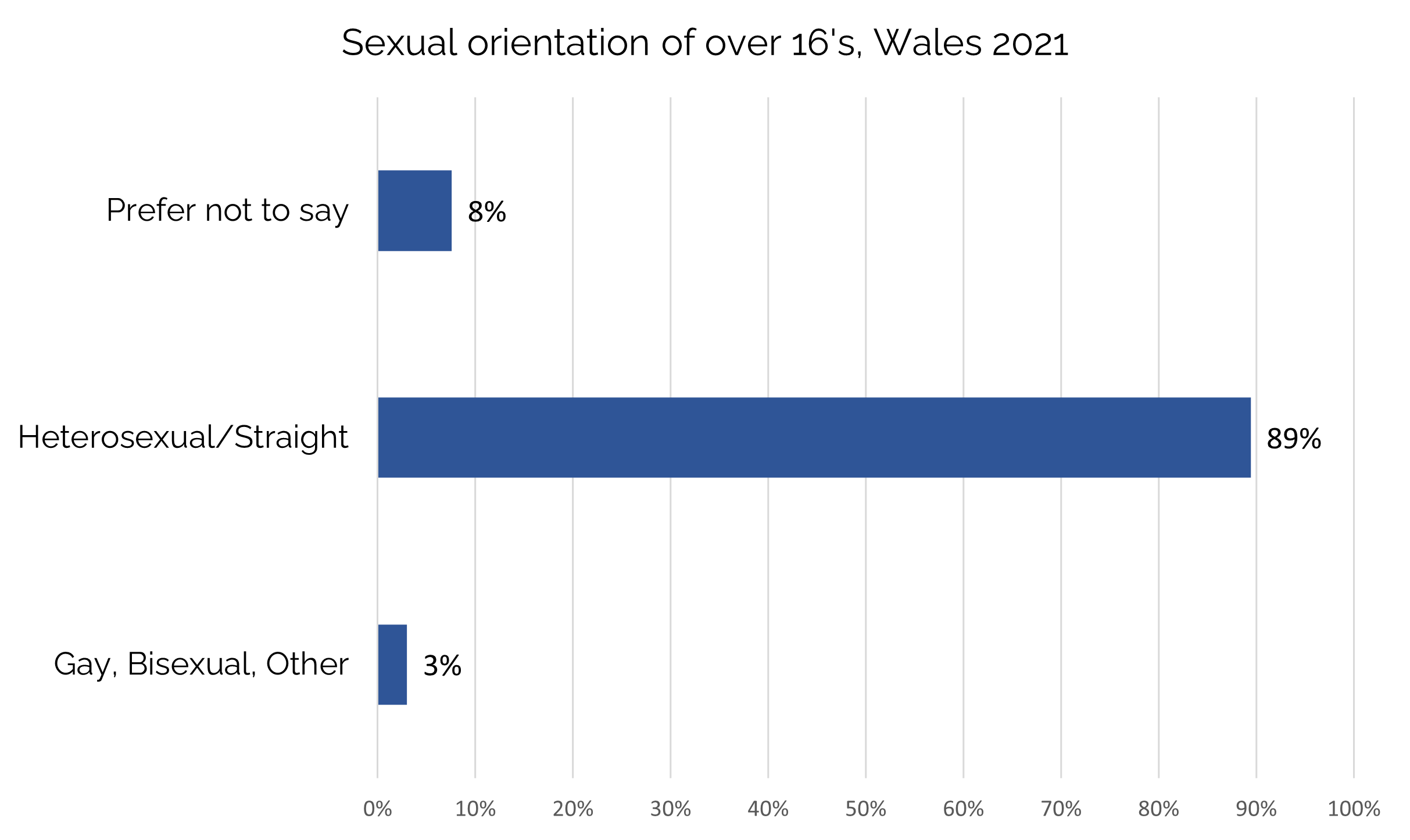
Source: Census 2021If you want to analyse the data yourself, use Census website or the ‘query data’ function on Nomis website.
If you are interested in finding out more about how this data can be used as part of your organisation’s equality monitoring or customer profiling: